



Philippine Employment Trends: Are More Jobs Coming? How the Philippines Compares with ASEAN Neighbors in Attracting Investors
Talentlush | September 13, 2024
How attractive is the Philippines among foreign investors compared to neighboring Asian countries? The Philippines has seen a mix of optimistic and challenging outcomes in recent years. Foreign businesses are increasingly bullish on the Philippine economy’s growth trajectory, setting larger foreign investment targets over the next decade. This optimism is buoyed by the country’s strategic location and a world-class talent pool, which is also influencing Philippine employment trends. These factors make it a favored investment destination in Southeast Asia.
This week, ANC reported that Australian companies visited the Philippines to explore opportunities for expanding their investments in the agriculture and mining sectors.
Works Cited: “Australian businesses in PH to explore investment expansion opportunities | ANC” YouTube, uploaded by ANC 24/7, https://youtu.be/OsvXXmbjU1o
This emphasizes the increasing interest of Australian companies in expanding their presence in the Philippines, focusing on key sectors such as renewable energy, agriculture, and technology. It highlights the Philippine government’s efforts, including regulatory reforms and incentives, designed to attract foreign investment. Australian business leaders express confidence in the Philippine market’s potential (ANC 24/7, 2024).
Overview of the Philippine Economy
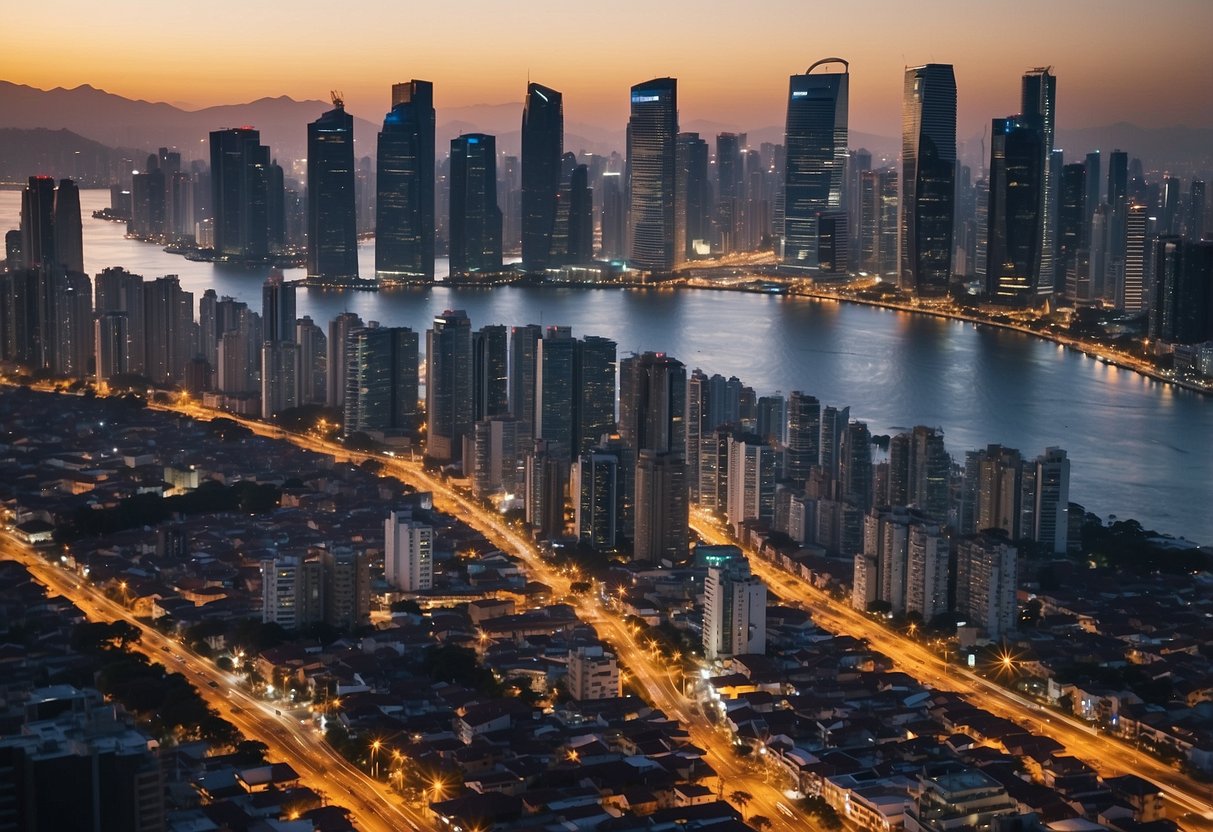
The Philippine economy shows significant resilience and potential for growth. Key factors include its GDP performance, the impact of the COVID-19 pandemic, and measures taken for economic recovery.
Philippine GDP and Economic Growth
The Philippines has experienced consistent economic growth in recent years, with GDP increasing at an average rate above 6% before the pandemic. The country’s economy includes diverse sectors such as agriculture, manufacturing, and services. The service sector, particularly the BPO (Business Process Outsourcing) industry, plays a crucial role. Rising domestic demand and robust tourism have further bolstered economic performance, contributing to a healthy expansion mode.
Impact of COVID-19 Pandemic
The COVID-19 pandemic had a significant impact on the Philippine economy. Lockdowns and travel restrictions led to reduced economic activity, affecting multiple sectors like tourism and retail. Job losses and business closures were common, contributing to a sharp economic downturn. Despite these challenges, the government implemented stimulus packages and support programs to mitigate the economic damage, focusing on vulnerable sectors and providing financial aid to affected individuals and businesses.
Recovery Measures and Growth Prospects
Recovery measures in the Philippines focused on stimulating economic activities and boosting investor confidence. Reforms aimed at opening more sectors to foreign investments and streamlining administrative procedures have been key. The government’s Philippine Development Plan 2023-2028 and the 8-point socioeconomic agenda emphasize inclusive and sustainable growth. As a result, the economy is on a path to recovery, with projections for continued robust growth supported by rising domestic demand and a recovery in services, especially tourism.
Foreign Investment Landscape in the Philippines
The Philippines has been garnering significant attention as a key destination for foreign investments, owing to its strategic location and skilled workforce.
Current Foreign Investment Climate
Foreign direct investments (FDIs) in the Philippines have demonstrated rapid growth. Amid global economic uncertainties, the Department of Trade and Industry (DTI) emphasized a notable 36% rise in investments approved by the Board of Investments (BOI) during the first half of 2024 compared to the same period in 2023. Between January and June 2024, BOI-approved investments totaled PHP 950 billion (USD 16.7 billion), with foreign investments making up 30%, or PHP 286 billion (USD 5 billion)—marking the highest first-semester BOI approvals in its 57-year history. Despite the Bangko Sentral ng Pilipinas (BSP) reporting a 37% decline in net Foreign Direct Investment (FDI) inflows for April, the DTI remains hopeful due to the growing investment pipeline (DTI, 2024).
In 2021, the country saw a net inflow of $10.52 billion, reflecting a 54.2% increase from the previous year. The economic reforms aimed at liberalizing the market have further opened up opportunities for foreign investors. This trend is expected to continue as businesses in the region foresee an increase in trade with other ASEAN countries.
Types of Foreign Investments
The types of foreign investments entering the Philippines include FDIs and foreign portfolio investments. FDIs focus on long-term investments in physical assets, like factories and infrastructure. Foreign portfolio investments, on the other hand, involve investing in financial assets such as stocks and bonds. These investment types play a crucial role in boosting the country’s economic activity, bringing in capital and technological advancements.
Sectoral Analysis of Foreign Investments
The service sector has attracted a significant share of foreign investments, with business process outsourcing (BPO) and information technology (IT) being the primary areas. Manufacturing, especially electronics, is another major recipient of FDI. Additionally, infrastructure projects, including transportation and energy, have seen a rise in foreign capital, further driving the economic development in these sectors.
Comparative Analysis: Philippines vs. Neighboring ASEAN Countries
The Philippines is vying to attract more Foreign Direct Investments (FDIs) compared to its neighboring ASEAN countries. This involves analyzing regional investment trends, the appeal of various investment incentives, and the impact of the ASEAN Economic Community (AEC) on investment flows within the region.
Regional Investment Trends
Foreign Direct Investment (FDI) inflows vary considerably among ASEAN countries. For instance, Singapore remains a top destination due to its strong regulatory environment and advanced infrastructure.
Singapore has an open economy that relies heavily on trade and is a key part of the global supply chain. The country has welcoming investment policies and a strong free market, while also focusing on managing its economic growth. U.S. companies are drawn to Singapore because of its transparency, business-friendly laws, low taxes, smooth customs process, strong intellectual property protection, and excellent infrastructure. Singapore is known for enforcing anti-corruption laws and is ranked as the least corrupt country in Asia. Globally, it was ranked the fifth-least corrupt nation by Transparency International in 2022. The U.S.-Singapore Free Trade Agreement (USSFTA), which started in 2004, opened up more trade opportunities between the U.S. and Singapore, improved intellectual property protections, and fostered cooperation on labor rights and environmental protections (Singapore – Investment Climate Statement, 2024).
Malaysia and Thailand also attract significant FDIs, largely from the manufacturing and services sectors. Between 2022 and 2023, ASEAN countries Indonesia, Thailand, Singapore, Vietnam, and Malaysia received $124 billion investments for new manufacturing projects making up 96.5% of this total which is more than what China got for manufacturing investments (FDI Intelligence, 2024).
The Philippines has seen growth in FDI but lags behind some of its peers. Emerging industries such as Business Process Outsourcing (BPO) are attracting interest, but challenges like infrastructure and regulatory hurdles persist. According to a January 2024 report by the US International Trade Administration, although the U.S. invested $5.12 billion in 2021, the Philippines’ competitiveness ranking fell to 52 out of 64 countries in 2023, down from 48 the previous year. Issues like poor infrastructure, and internal policies remain significant barriers. To attract more foreign investment, the Philippines has introduced new policies allowing full foreign ownership in many industries and eased regulations for foreign retail businesses.
Works Cited: “100% foreign ownership sa telcoms, railways, pinayagan na; ano ang epekto nito sa ating bansa?” YouTube, uploaded by GMA Integrated News, https://www.youtube.com/watch?v=9PmD7ixz7ss
In Kearney’s 2024 Foreign Direct Investment (FDI) Confidence Index for emerging markets, the Philippines is ranked 13th, down from 12th last year. Despite this drop, the Philippines is still ahead of Vietnam, which fell from 13th place in 2023 to 18th this year. Among ASEAN countries, Thailand is the top choice for foreign investors, ranking 9th, followed by Malaysia at 10th and Indonesia at 12th. Singapore, being classified as a developed market, is not included in the emerging markets list but is ranked 8th globally in Kearney’s 2024 FDI Confidence Index (Manila Bulletin, 2024).
Investment Incentives Comparison
Different ASEAN countries offer a variety of investment incentives to lure foreign investors. The Philippines provides tax holidays, reduced customs duties, and fiscal incentives for specific sectors. These incentives aim to attract more manufacturing and services investments.
Malaysia and Indonesia also offer attractive tax incentives and streamlined business processes that appeal to investors. Thailand has focused on promoting advanced industries like robotics and biotechnology through generous fiscal perks. By comparing these incentives, one can gauge how competitive the Philippines is in attracting investments.
ASEAN Economic Community Impact on Investments
The ASEAN Economic Community (AEC) seeks to create a single market and production base among ASEAN members. This initiative aims to enhance trade, reduce tariffs, and facilitate the free flow of goods, services, and investments. Such integration benefits the entire region by making it more competitive globally.
For the Philippines, the AEC provides both opportunities and challenges. Access to a larger market can attract more FDIs, especially in sectors like manufacturing and services. However, increased competition from neighboring countries requires the Philippines to continually improve its investment climate and business infrastructure to fully benefit from the AEC integration.
Enhancing labor skills, upgrading infrastructure, and streamlining regulations will be crucial for maximizing the benefits of the AEC.
Drivers of Attractiveness for Foreign Investors

The Philippines offers several compelling reasons for foreign investors to set up operations in the country. Key drivers include significant infrastructure development, a skilled workforce, strides in digitalization, and favorable government policies.
Philippine Infrastructure Development
The country is making considerable investments in infrastructure. Projects like the “Build, Build, Build” program aim to modernize transportation, logistics, and utilities. This initiative includes highways, airports, seaports, and railroads, enhancing overall connectivity.
These developments reduce logistics costs and improve supply chain efficiency. By focusing on infrastructure, the Philippines aims to attract more foreign direct investment, boosting economic growth further.
Human Capital and Workforce
The Philippines boasts a young, dynamic, and educated workforce. With a median age of around 25 years and a high literacy rate, the labor pool is capable of meeting diverse industry needs. English proficiency is another strong point, attracting companies in customer service and IT sectors that are in demand and contributing to current Philippine employment trends.
Investment in education and skills training ensures the workforce is prepared for evolving job markets. The country’s population provides a large domestic market and a readily available labor force, making it appealing to foreign investors.
Digitalization and Connectivity
Digital infrastructure is rapidly improving. Efforts in enhancing broadband and mobile connectivity are evident. Major telecom companies are investing in 5G networks, making the country competitive in the digital economy.
Increased focus on digitalization aims to create a more efficient business environment. Initiatives to streamline processes through online platforms contribute to an investor-friendly climate. Improving digital connectivity opens new opportunities in e-commerce and tech industries.
Government Policies and Incentives
Supportive government policies play a critical role. Various incentives, including tax holidays and investment zones, are designed to attract foreign businesses. The CREATE law, which lowers corporate income tax and rationalizes fiscal incentives, is a notable example.
The government also ensures a stable business environment by upholding contracts and protecting intellectual property. Policy reforms enhance ease of doing business, making it easier for foreign companies to establish and expand operations in the Philippines.
Investment Outlook and Future Opportunities
Works Cited: “U.S. and Japan will Invest $100 Billion in the Philippines Including in Oil and Gas Exploration” YouTube, uploaded by ASEAN Analytics, https://www.youtube.com/watch?v=eWwdBS6qAUY
The Philippines offers significant opportunities for foreign investors, particularly in sectors like health and education infrastructure, energy and agriculture, and technological and digital markets. These sectors are the key drivers for future economic growth and development.
Health and Education Infrastructure
Investment in the health and education sectors is critical for improving the quality of life and workforce skills. The government has made strides in upgrading healthcare facilities and expanding educational opportunities.
Public and private partnerships are increasing, merging local knowledge with international expertise. New hospitals, clinics, and educational institutions are being developed to meet growing demand. Moreover, policies are being put in place to attract foreign investment in these sectors, making the Philippines a prime investment destination for health and education.
Energy and Agricultural Development
Energy and agriculture are focal points for the country’s growth prospects. Investments in renewable energy sources such as solar and wind power are gaining traction, helping to meet rising energy demands sustainably.
Agriculture, a backbone of the Philippine economy, is also seeing innovations in technology and practices. Foreign investors are encouraged to invest in agricultural technologies to boost productivity and efficiency. This includes farm-to-market routes, irrigation systems, and advanced farming equipment, which are crucial for enhancing agricultural output and profitability.
Technological and Digital Market Prospects
The technological landscape in the Philippines is rapidly evolving. Government initiatives aim to promote digitalization and tech-based startups. Investments in this sector are contributing to a robust digital market, creating jobs and fostering innovation. These developments are also shaping Philippine employment trends, as companies seek skilled professionals to meet the growing demand in the tech industry.
The rise of e-commerce and fintech industries offers new opportunities for foreign investors. The IT sector is thriving, supported by a skilled workforce that specializes in software development, data analytics, and cybersecurity. Companies from around the world are banking on the Philippines’ technological potential, making it a competitive player in the digital economy.
Role of Government and Financial Institutions
Efforts by the government and financial institutions play a crucial role in attracting foreign investments to the Philippines. Key measures include initiatives by Bangko Sentral ng Pilipinas and various government financial systems and support mechanisms to foster a stable economic environment.
Bangko Sentral ng Pilipinas Initiatives
Bangko Sentral ng Pilipinas (BSP) has been proactive in improving the financial landscape. Recent initiatives include increasing transparency and accountability in banking practices. BSP focuses on reducing inflation to create a more stable economy. Measures like adapting to the digital economy help in attracting foreign investments.
Monetary policies by BSP also emphasize maintaining a stable exchange rate. This is important for foreign investors to minimize currency-related risks. The push for adopting new financial technologies supports both domestic businesses and foreign investors, promoting economic growth and job creation.
Government Financial Systems and Support
The government’s financial systems play a vital role in making the Philippines more appealing to foreign investors. Streamlining administrative procedures helps ease the entry of foreign investments, as noted in a World Bank report.
Government spending is also directed towards public infrastructure projects, which are essential for a growing economy. Investments in transportation, communication networks, and public utilities create a supportive environment for businesses. These efforts reduce operational costs and improve efficiency, which is attractive to foreign investors.
Economic recovery from COVID-19 has seen various businesses reopening and adjusting to new market demands. This is driven by governance improvements aimed at creating a more favorable investment environment, as outlined in discussions on governance and FDI attraction.
Economic Impact on Society and Livelihoods
The economic growth of the Philippines has had a significant effect on both job creation and the livelihoods of its population. Understanding these impacts helps to grasp the broader implications for the local labor market and overall societal health.
Philippine Employment Trends: Job Creation and Livelihood Enhancement
The Philippines has seen positive changes in job growth, especially in productive sectors. Before the pandemic, the country maintained an economic growth rate above 6%, and this created more productive jobs and increased real wages. These developments reduced poverty and enhanced livelihoods for many Filipinos.
Investing in the green economy could also create millions of jobs, according to McKinsey. This transition, although challenging, promises new opportunities in various sectors, requiring retraining for lower-income workers to qualify for these roles.
Attracting foreign investments is crucial too. The World Bank emphasizes that big foreign investments can bring quality jobs, benefiting a wide range of workers. Opening more sectors to foreign investments and encouraging the adoption of new technology can create even more opportunities. The current administration has taken steps to attract foreign investments, resulting in over PHP4 trillion in investments and creating thousands of jobs, particularly in the information technology and business process management sectors.
According to the Department of Labor and Employment (DOLE), President Ferdinand Marcos Jr.’s international visits have led to investments that are expected to generate approximately 200,000 high-quality jobs (Department of Labor and Employment, as cited in Inquirer.net, 2023).
The large investment of P4.019 trillion ($72.178 billion) from these trips shows a strong push to boost the economy and create jobs.
Local Population and Labour Market
The local labor market in the Philippines reflects the changes brought by these economic strategies. Surveys indicate that Filipino adults prioritize job creation and economic discussions, highlighting the demand for sustainable employment.
Foreign investments are vital for enhancing the local labor market. By simplifying administrative procedures and supporting market entry, job opportunities increase. This boosts private sector growth, which, in turn, strengthens overall economic recovery.
The impact on livelihoods is significant, as better job opportunities and higher wages improve quality of life. Continued focus on these strategies is essential to maintaining the positive momentum in the labor market and ensuring long-term growth.
Frequently Asked Questions
In this section, common questions about the attractiveness of the Philippines to foreign investors and comparisons with neighboring Asian countries are addressed.
What factors contribute to the Philippines’ attractiveness to foreign investors?
Stable economic growth, a large English-speaking workforce, and a strategic location in Southeast Asia make the Philippines attractive to foreign investors. Key growth areas include technology, healthcare, and renewable energy.
How does the Philippines compare to other Southeast Asian countries in attracting foreign investments?
The Philippines lags behind countries like Singapore, Thailand, Malaysia, and Indonesia but surpasses Vietnam in terms of foreign direct investment based on 2024 reports.
What incentives does the Philippines offer to foreign investors?
The Philippines offers tax incentives, streamlined business procedures, and economic zones that provide duty-free importation of capital equipment. These incentives are aimed at attracting foreign capital.
How have recent economic policies impacted foreign investment in the Philippines?
Recent economic policies have mixed impacts. Various reforms aim to ease business operations, but ongoing issues like regulatory complexity and infrastructure challenges still hinder foreign investments.
What sectors in the Philippines have seen significant foreign investment growth?
Tech, healthcare, and renewable energy sectors have seen significant foreign investment growth. Remote work trends and a focus on sustainability are driving investment in these areas.
Ready to take the next step in your career?
Upload your resume to the Talentlush Job Board and showcase your skills to potential employers eager to invest in top talent!
Need tailored support for your job search?
Book a personalized 30-minute or 1-hour career coaching session with us. Experience the Talentlush approach and unlock your career potential!
Employers, seeking candidates?
Post your job openings for free on the Talentlush Job Board! Explore our affordable packages for enhanced features and visibility to attract the best talent.
Don’t miss out—apply today!
Citations:
ANC 24/7. (2024, September 8). Australian businesses in PH to explore investment expansion opportunities | ANC [Video]. YouTube. https://www.youtube.com/watch?v=OsvXXmbjU1o
De Vera, B. O. (2021, October 12). PH second to last among 14 countries in FDI attractiveness—UK think tank | Inquirer Business. INQUIRER.net. https://business.inquirer.net/332259/ph-second-to-last-among-14-countries-in-fdi-attractiveness-uk-think-tank
Dtiwebteam. (2024, July 11). Philippines showcases strong investment approval growth amid global economic challenges. Department of Trade and Industry Philippines. https://www.dti.gov.ph/archives/news-archives/philippines-showcases-strong-investment-approval-growth-amid-global-economic-challenges/
Inquirer.net. (2023, September 8). Marcos’ foreign trips to yield 200,000 jobs, says DOLE. https://newsinfo.inquirer.net/1958026/marcos-foreign-trips-to-yield-200000-jobs-says-dole
Intelligence, F. (n.d.). Asean overtakes China for manufacturing FDI. The Financial Times Ltd. https://www.fdiintelligence.com/content/news/asean-overtakes-china-for-manufacturing-fdi-83610
Philippines’ appeal to foreign investors dips in 2024. (2024). Manila Bulletin. https://mb.com.ph/2024/4/4/philippines-appeal-to-foreign-investors-dips-in-2024
Singapore – Investment Climate Statement. (2024, January 5). International Trade Administration | Trade.gov. https://www.trade.gov/country-commercial-guides/singapore-investment-climate-statement#:~:text=Singapore
Share this:

Discover more from Talentlush - Job Search & HR Solutions Platform
Subscribe to get the latest posts sent to your email.